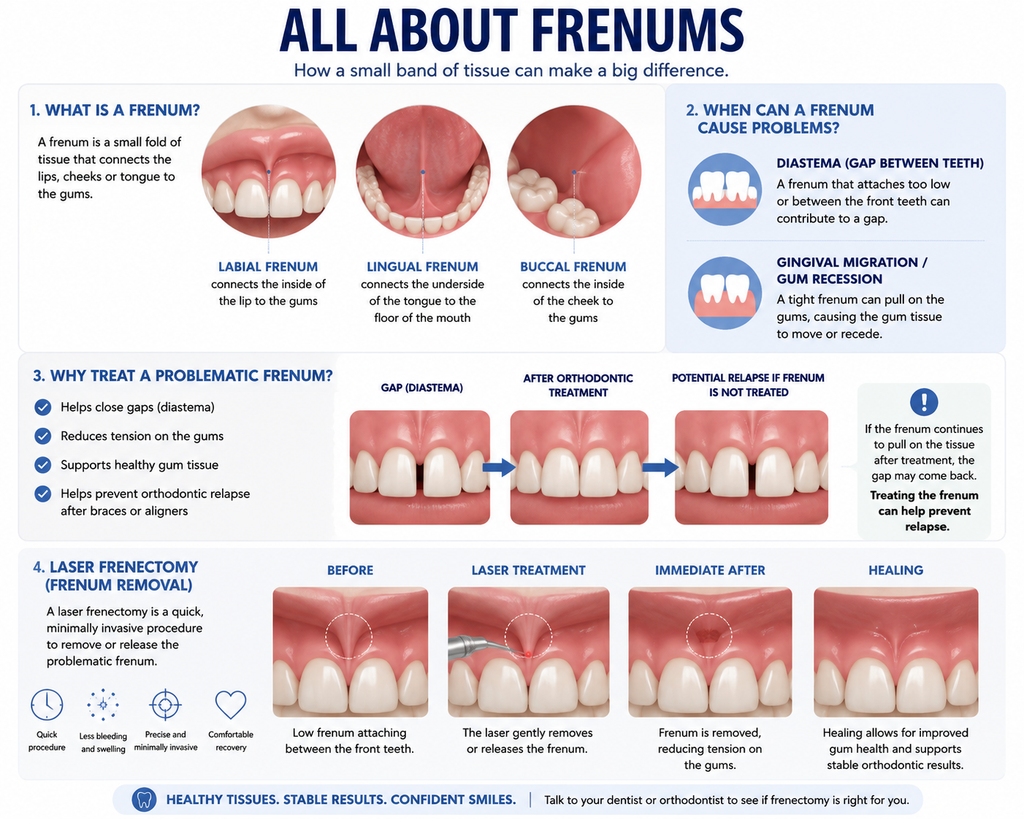
Have you noticed a gap between your front teeth, gum recession, or a tight band of tissue connecting your lip to your gums? A frenum could be contributing to the problem.
Frenums are normal folds of tissue found inside the mouth. However, when a frenum is too thick, tight or positioned too close to the teeth and gums, it can sometimes interfere with orthodontic treatment, tooth movement and gum health.
In these cases, your dentist or orthodontist may recommend a frenectomy, which is a procedure to remove or release the problematic frenum. Laser technology can make this a quick and minimally invasive treatment option.
What Is a Frenum?
A frenum is a small fold of connective tissue that connects parts of the mouth and helps stabilise the lips, cheeks and tongue.
There are several types of frenums, including:
- Labial frenum: connects the inside of the lip to the gums.
- Lingual frenum: connects the underside of the tongue to the floor of the mouth.
- Buccal frenum: connects the inside of the cheek to the gums.
Frenums are a normal part of your oral anatomy and usually don’t require treatment. However, a frenum that is unusually thick, tight or attached in an unfavourable position can sometimes cause dental or orthodontic concerns.
Can a Frenum Cause a Gap Between Your Teeth?
One of the most common concerns associated with the upper labial frenum is a gap between the upper front teeth, known as a diastema.
If the labial frenum extends down towards or between the front teeth, it can place tension on the surrounding tissues. In some patients, this may contribute to maintaining a gap between the teeth or make it more difficult for the teeth to stay together following orthodontic treatment.
However, not every gap between teeth is caused by a frenum. Tooth size, jaw development, genetics and other factors can also contribute to a diastema.
An orthodontic assessment can help determine whether the frenum is contributing to the gap.
Frenums and Gum Migration
A tight or unusually positioned frenum can also place tension on the gum tissue.
In some cases, this tension may contribute to gingival migration or gum recession, where the gum tissue moves away from the tooth. This can expose more of the tooth surface and, depending on the cause and severity, may affect gum health.
If your dentist or orthodontist suspects that a frenum is contributing to gum problems, they will assess the position of the frenum and the surrounding gum tissue before recommending treatment.
What Is a Frenectomy?
A frenectomy is a procedure used to remove or release a frenum that is causing a dental, orthodontic or functional concern.
Frenectomy treatment may be considered when a frenum is contributing to:
- A gap between the front teeth (diastema)
- Tension on the gums
- Gum recession or migration
- Difficulty maintaining orthodontic tooth movement
- Orthodontic relapse in certain cases
- Other functional or oral health concerns
Importantly, not everyone with a prominent frenum needs a frenectomy. Treatment is recommended based on an individual assessment.
Laser Frenectomy: A Minimally Invasive Treatment
A laser frenectomy uses dental laser technology to remove or release the problematic frenum.
Compared with traditional surgical techniques, laser treatment can offer a precise approach and may result in less bleeding and swelling. It is generally considered a small, minimally invasive procedure, rather than major oral surgery.
The exact procedure and healing experience will vary from patient to patient. Your dental professional will explain what to expect and whether laser frenectomy is suitable for you.
Why Is Frenum Removal Sometimes Recommended During Orthodontic Treatment?
If a frenum is contributing to a gap between the teeth, simply closing the gap with braces or clear aligners may not always address every factor involved.
In selected cases, the frenum may continue to place tension on the tissues after the teeth have been moved.
This is particularly relevant when treating a midline diastema, or gap between the upper front teeth.
If the underlying factors are not properly addressed, there may be an increased risk of the teeth moving apart again. This is known as orthodontic relapse.
A frenectomy may therefore be recommended as part of a comprehensive orthodontic treatment plan when the frenum is identified as a contributing factor.
Does Everyone With a Gap Need a Frenectomy?
No.
A gap between the teeth does not automatically mean that you need your frenum removed.
Your orthodontist will consider several factors, including:
- The size and position of the gap
- The attachment and thickness of the frenum
- The tension placed on the gums
- Your tooth and jaw development
- Your orthodontic treatment plan
- The likelihood of the gap reopening after treatment
The best treatment approach will depend on your individual circumstances.
What Happens During a Laser Frenectomy?
A laser frenectomy is generally a straightforward procedure.
During treatment, the dental professional uses a laser to carefully remove or release the excess frenum tissue. The aim is to reduce unwanted tension while preserving the surrounding healthy tissue.
Because the procedure is relatively small, recovery is typically much simpler than that associated with more extensive oral surgery. Your dental professional will provide specific instructions for caring for the area while it heals.
Frenectomy and Orthodontic Relapse
One of the reasons a frenectomy may be recommended is to help reduce factors that could contribute to orthodontic relapse.
When orthodontic treatment closes a space between teeth, retainers play an important role in maintaining the result. However, if a problematic frenum is contributing to the original space, your orthodontist may recommend addressing it as part of the overall treatment plan.
A frenectomy is therefore not simply about removing tissue — it can be about creating a more favourable environment for maintaining your orthodontic result.
When Should You See an Orthodontist or Dentist About Your Frenum?
Consider speaking to your dentist or orthodontist if you have:
- A persistent gap between your upper front teeth
- A frenum that appears to attach very close to the teeth
- Gum recession or gum tissue that appears to be pulled when you move your lip
- A gap that has reopened after orthodontic treatment
- Concerns about your frenum following braces or clear aligner treatment
A professional assessment can determine whether the frenum is actually contributing to the problem and whether treatment is necessary.
Book a Frenum Assessment
Frenums are a normal part of the mouth, and most people do not need them removed. However, when a frenum contributes to a diastema, gum tension or orthodontic relapse, treatment may be recommended.
A laser frenectomy is a relatively quick and minimally invasive option for treating certain problematic frenums.
If you’re concerned about a gap between your teeth, gum migration or a prominent frenum, speak to our team about an assessment.
Book your consultation today to find out whether frenectomy treatment is right for you.